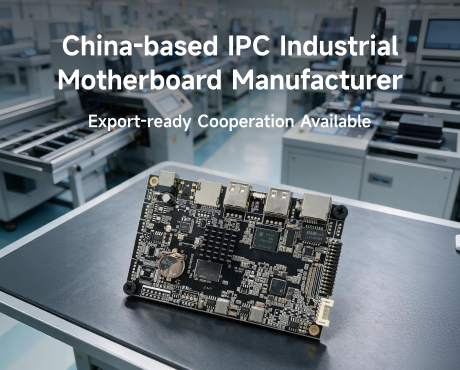
Wanlin Group · WanlinSBC · RK3568 CCD scanner handheld POS board Pro+ for India Buyers - Wholesale Payment Security Biometric a
RK3568 CCD scanner handheld POS board Pro+ for India Buyers - Wholesale Payment Security Biometric a
CCD scanner handheld POS board - Payment Security Biometric and Contactless POS Boards - India export OEM ODM wholesale
RK3568 CCD scanner handheld POS board Pro+ for India Buyers - Wholesale Payment Security Biometric a
Content updated:
Configuration: Review the technical details below and specify the required hardware and software revision.
Availability: Request confirmation for the selected configuration.
Details
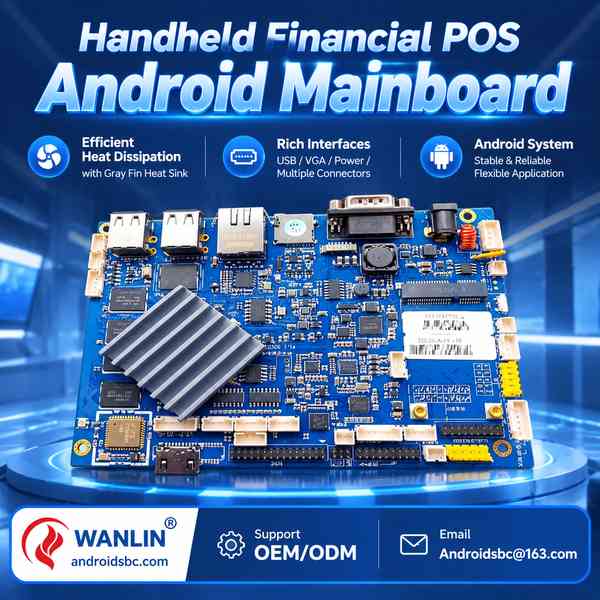
Wanlin Group (Shenzhen, China) confirmed on September 29, 2026 that India payment device makers and acquiring integrators can order the RK3568-PY160 at factory terms, Rockchip RK3568 quad-core SoC, 4GB LPDDR4 + 32GB eMMC, 5.5-inch MIPI DSI touch, Android 13.0 with multi-language UI, Dual-band WiFi with Bluetooth 5.2 and 4G LTE on an optional daughter board, under the 2026 Payment Security Biometric and Contactless POS Boards program: 4GB LPDDR4 + 32GB eMMC, with secure handheld payment terminals where face recognition, fingerprint authorisation, NFC contactless, EMV chip and magnetic stripe all settle through a hardware secured path with secure boot, tamper inputs and key storage, built for the way India merchants and field teams actually work. Wanlin Group as the handheld POS board supplier, exporter and original manufacturer now serves local partners, regional exclusive distributors and strategic OEM clients in more than 60 destination markets, and this export program is open to India buyers ordering at factory-direct terms.
Core parameters: Rockchip RK3568 quad-core SoC, 4x Cortex-A55 with an integrated NPU. CPU 4x ARM Cortex-A55 up to 2.0GHz, 64-bit architecture. GPU ARM Mali-G52 2EE GPU, OpenGL ES 3.2 / Vulkan 1.1. Render and security path Mali-G52 2EE render path with the on-chip NPU handling QR decoding assist, face detection and OCR work. Video decode Hardware decode up to 4K@60fps across H.265, VP9 and H.264, with 1080P@60fps encode for audit capture. Camera input MIPI CSI camera input for face payment cameras, barcode imagers and document capture. Memory and storage 4GB LPDDR4 + 32GB eMMC. Operating system Android 13.0 with multi-language UI, OTA upgrade and remote device management agent. Display and touch 5.5-inch 720x1440 MIPI DSI panel with capacitive multi-touch and glove-mode tuning. Audio and signalling Speaker with vibration motor driver and a programmable tone set for scan confirmation. Interfaces and I/O 1x MIPI DSI display with capacitive touch, 1x MIPI CSI camera, 1x USB Type-C with OTG, 1x USB Host, 1x RS232 or TTL UART, 1x printer head and cutter control header, 1x scan engine UART, GPIO, I2C, SPI, PWM and ADC expansion. Networking Dual-band WiFi with Bluetooth 5.2 and 4G LTE on an optional daughter board. Power input Single-cell Li-Polymer pack with onboard charge management, fuel-gauge reporting and fast-charge profile, pack capacity selected per shift length and printer duty. Duty profile Continuous field duty with hardware watchdog, RTC retention, scheduled power on/off and auto power on after a mains cut; a wide-temperature build is available for cold-chain and outdoor routes. PCB Compact handheld POS PCBA with onboard LPDDR and eMMC, MIPI DSI display and touch, MIPI CSI camera, printer and scan-engine headers, SIM and TF card slots and a USB Type-C service port. Certifications CE / FCC / RoHS / REACH with EMV and PCI-relevant documentation support. Wanlin's 2026 export roadmap for India also covers custom memory and storage combos, printer and scan engine interface selection, contactless antenna placement, custom peripheral drivers, private-label branding and per-destination certification documentation packages.
Global Payment Security Biometric and Contactless POS Boards Market Overview and 2026 Buyer Demand
Buyers shortlisting secure handhelds rank tamper response, key storage and antenna tuning above raw CPU tier. Antenna tuning inside the closed enclosure decides first-tap read rate, which is the number passengers and shoppers actually feel.
Regional compliance for India is anchored on BIS registration, WPC ETA radio approval and BEE-relevant documentation. Cross-border buyers are advised to verify the certification scope, the contactless behaviour and the software build of every board before import, since some China-supplied boards ship without destination radio approval, without the payment documentation the acquirer asks for, or without the Android build the project actually needs, and any of those gaps can stall customs clearance or a scheme review.
Reference: Wanlin Group 2026 handheld POS export program documentation, Rockchip and Allwinner platform datasheets, field deployment records 2024-2026.
Payment Security Biometric and Contactless POS Boards Engineering Architecture and Hardware Platform
The handheld POS family is engineered on three pillars: (1) an Rockchip RK3568 quad-core SoC, 4x Cortex-A55 with an integrated NPU compute block with Mali-G52 2EE render path with the on-chip NPU handling QR decoding assist, face detection and OCR work; (2) a display and capture pipeline built around Hardware decode up to 4K@60fps across H.265, VP9 and H.264, with 1080P@60fps encode for audit capture; (3) a software layer pairing Android 13.0 with multi-language UI, OTA upgrade and remote device management agent with OTA tooling, device management and the Rockchip RK3568 Android BSP, AOSP build support, peripheral driver kit and the AndroidSBC SDK kit. This architecture delivers continuous field duty on battery at a cost point that undercuts cashier PCs while keeping the payment, print and scan response operators expect.
Three sub-modules define the engineering depth:
- Compute module - Rockchip RK3568 quad-core SoC, 4x Cortex-A55 with an integrated NPU. 4x ARM Cortex-A55 up to 2.0GHz, 64-bit architecture handles payment UI, catalogue screens, signature capture and on-device vision work inside a fanless handheld shell.
- Display and capture module - 5.5-inch 720x1440 MIPI DSI panel with capacitive multi-touch and glove-mode tuning. MIPI CSI camera input for face payment cameras, barcode imagers and document capture covers the camera input used for face payment, document capture and proof of delivery, so one device closes the transaction and records the evidence.
- Peripheral and management module - 1x MIPI DSI display with capacitive touch, 1x MIPI CSI camera, 1x USB Type-C with OTG, 1x USB Host, 1x RS232 or TTL UART, 1x printer head and cutter control header, 1x scan engine UART, GPIO, I2C, SPI, PWM and ADC expansion. Headless recovery is supported through the USB service path, and the toolchain covers Rockchip RK3568 Android BSP, AOSP build support, peripheral driver kit and the AndroidSBC SDK kit, OTA upgrade, boot animation customization, pre-installed app support and launcher customization for remote fleet management.
Mechanically the board is a Compact handheld POS PCBA with onboard LPDDR and eMMC, MIPI DSI display and touch, MIPI CSI camera, printer and scan-engine headers, SIM and TF card slots and a USB Type-C service port, which is why it drops into handheld shells, vehicle cradles and belt-worn cases without a tooling change.
Featured Model - RK3568-PY160 Pro+ Technical Signature
The technical signature of RK3568-PY160 on this configuration is documented below. Every parameter is verified by our Shenzhen lab against the printer duty profile, the contactless read behaviour of the final enclosure and the electrical limits of IEC / UL 62368-1.
| Specification | Value |
|---|---|
| soc_platform | Rockchip RK3568 quad-core SoC, 4x Cortex-A55 with an integrated NPU |
| cpu_core | 4x ARM Cortex-A55 up to 2.0GHz, 64-bit architecture |
| gpu_3d | ARM Mali-G52 2EE GPU, OpenGL ES 3.2 / Vulkan 1.1 |
| render_security_path | Mali-G52 2EE render path with the on-chip NPU handling QR decoding assist, face detection and OCR work |
| video_decode | Hardware decode up to 4K@60fps across H.265, VP9 and H.264, with 1080P@60fps encode for audit capture |
| camera_input | MIPI CSI camera input for face payment cameras, barcode imagers and document capture |
| memory_storage | 4GB LPDDR4 + 32GB eMMC |
| os_android | Android 13.0 with multi-language UI, OTA upgrade and remote device management agent |
| display_touch | 5.5-inch 720x1440 MIPI DSI panel with capacitive multi-touch and glove-mode tuning |
| audio_signalling | Speaker with vibration motor driver and a programmable tone set for scan confirmation |
| interfaces_io | 1x MIPI DSI display with capacitive touch, 1x MIPI CSI camera, 1x USB Type-C with OTG, 1x USB Host, 1x RS232 or TTL UART, 1x printer head and cutter control header, 1x scan engine UART, GPIO, I2C, SPI, PWM and ADC expansion |
| networking | Dual-band WiFi with Bluetooth 5.2 and 4G LTE on an optional daughter board |
| power_input | Single-cell Li-Polymer pack with onboard charge management, fuel-gauge reporting and fast-charge profile, pack capacity selected per shift length and printer duty |
| duty_profile | Continuous field duty with hardware watchdog, RTC retention, scheduled power on/off and auto power on after a mains cut; a wide-temperature build is available for cold-chain and outdoor routes |
| pcb_mechanics | Compact handheld POS PCBA with onboard LPDDR and eMMC, MIPI DSI display and touch, MIPI CSI camera, printer and scan-engine headers, SIM and TF card slots and a USB Type-C service port |
| use_case | secure handheld payment terminals where face recognition, fingerprint authorisation, NFC contactless, EMV chip and magnetic stripe all settle through a hardware secured path with secure boot, tamper inputs and key storage |
Payment Security Biometric and Contactless POS Boards Application Scenarios across Deployment Sites
Field records from operating Payment Security Biometric and Contactless POS Boards installations follow, with site, unit count and the numbers the operator tracked.
Scenario 1: signature capture with secure timestamp (Nagasaki, Japan). A medical clinic group fitted 310 handhelds that capture the patient signature on the glass and bind it to a secure timestamp, so the consent record and the payment record carry the same reference. Measured result: consent record retrieval time fell from hours to seconds and missing consent forms dropped to zero.
Scenario 2: unmanned store entry and exit payment (Daejeon, Korea). A convenience operator fitted 94 unmanned stores with handheld-class boards at the exit gate that match the shopper face to the entry record and settle the basket without a staffed till. Measured result: staffed hours per store fell 63% and exit gate queue time stayed under 6 seconds.
Scenario 3: bank acquiring with PSAM card slots (Nuremberg, Germany). An acquirer deployed 3,600 handhelds with PSAM card slots and a key loading procedure run at the depot, so each unit carries its own keys before it reaches a merchant. Measured result: key loading errors at merchant sites fell to zero and certification audit findings closed in one pass.
Scenario 4: fingerprint authorisation on high value sales (Verona, Italy). A jewellery chain fitted 48 handhelds that require a fingerprint authorisation from the floor manager above a set amount, storing the approval against the transaction record for the insurer. Measured result: high value chargeback exposure fell 81% and manager call-outs to the floor dropped to zero.
Scenario 5: stored value and loyalty on one device (Constanta, Romania). A retail group runs 740 handhelds that read the loyalty card, apply the stored value balance and take the remaining amount on card, all inside one transaction record. Measured result: loyalty redemption rose 2.7x and double-scan errors at the till dropped to zero.
AndroidSBC Payment Security Biometric and Contactless POS Boards Competitive Advantages for Cross-Border Buyers
The handheld POS board and the wider AndroidSBC payment device portfolio deliver eight advantages for cross-border B2B buyers sourcing from Chinese manufacturers:
- Source-factory pricing - Wanlin operates the SMT lines, so FOB Shenzhen pricing runs 42-60% below western-branded payment terminals with no per-device licence fee.
- Payment path coverage - QR, barcode, NFC contactless, EMV chip and magnetic stripe on one board, with secure boot, tamper inputs and key storage where the scheme asks for it.
- Printer and scan integration - thermal printer head and cutter control plus a scan engine UART on the board, so receipt and scan do not need a second controller.
- Radio coverage - 4G LTE with dual-SIM and eSIM options, dual-band WiFi, Bluetooth and GNSS positioning, so one board serves retail, delivery and field service channels.
- Offline behaviour - transaction and scan queueing that posts when the signal returns, because the places where payment happens are the places where coverage fails.
- Peripheral and service path - 1x MIPI DSI display with capacitive touch, 1x MIPI CSI camera, 1x USB Type-C with OTG, 1x USB Host, 1x RS232 or TTL UART, 1x printer head and cutter control header, 1x scan engine UART, GPIO, I2C, SPI, PWM and ADC expansion, covering printer, scanner, camera, RFID, SIM and TF, GPIO and serial expansion, plus a USB service port for field recovery.
- Multi-OS flexibility - Android 13.0 with multi-language UI, OTA upgrade and remote device management agent, so GMS devices, AOSP payment builds and private-label launcher programmes run on one board.
- Unattended reliability - hardware watchdog, RTC retention, scheduled power on and off, auto power on after a mains cut and OTA with a canary ring.
Payment Security Biometric and Contactless POS Boards Certifications, Electrical Performance and Assembly Notes
Electrical performance is characterised against the final enclosure: Single-cell Li-Polymer pack with onboard charge management, fuel-gauge reporting and fast-charge profile, pack capacity selected per shift length and printer duty, with the printer head supplied on its own power path and the contactless antenna tuned with the shell closed. The board is specified for Continuous field duty with hardware watchdog, RTC retention, scheduled power on/off and auto power on after a mains cut; a wide-temperature build is available for cold-chain and outdoor routes, which covers handheld shells, vehicle cradles and belt-worn cases with no fan and no vent.
Assembly and integration notes every integration team should run through before closing an enclosure:
- Budget the printer head supply as a separate power path with its own bulk capacitance, because the thermal head draws a sharp current pulse on every line of a receipt and will brown out the logic rail if it shares it
- Keep the MIPI DSI flex inside the bend radius drawn for the connector and strain-relieve it at both ends, since a handheld survives drops mainly by not loading the display connector
- Bond the battery NTC thermistor to the cell and route its sense wires away from the printer and motor currents, because a misread cell temperature derates charging in summer and overcharges in cold rooms
- Place the contactless antenna away from the battery, the shielding can and any metal bracket, then tune it with the final enclosure closed, since detuning shows up as read failures at the till rather than in the lab
- Configure secure boot and the tamper detection inputs before the security review, since payment schemes ask for the keys and the tamper response during certification rather than after
- Support the PCBA on all screw bosses and keep it flat in the shell, because a flexed board cracks BGA joints under drop testing and the failure appears weeks later in the field
- Seal the USB Type-C opening and give it ESD protection on the data lines, since the service port is the main entry point for both water and static in handheld duty
Cross-border buyers should note that handheld payment compliance combines product marking, radio certification, safety evaluation and the scheme documentation the acquirer asks for. For India specifically, importers should confirm BIS registration, WPC ETA radio approval and BEE-relevant documentation before shipment. Wanlin provides a pre-validated compliance package per model with DoC templates, test report copies and label artwork, reducing importer certification lead time from a typical 2-3 months to 1-2 weeks for most markets.
Payment Security Biometric and Contactless POS Boards Economics, MOQ, Lead Time and Logistics Math
For a first-time buyer ordering 1,000 pieces of the RK3568-PY160, the economics stack is:
| Cost Layer | USD per piece | USD for 1000 pcs |
|---|---|---|
| FOB Shenzhen factory price | $109.50 | $109500.00 |
| + Sea freight FCL 40HQ (estimated) | $2.10 | $2100.00 |
| CIF destination port | $111.60 | $111600.00 |
| + Customs duty 3%-10% (region dependent) | $0.64 | $637.10 |
| + Local delivery + warehousing | $3.80 | $3800.00 |
| DDP landed cost | $116.04 | $116040.00 |
Payment Security Biometric and Contactless POS Boards FAQ - OEM, ODM, MOQ, Lead Time, Partnership
Below are eight frequently asked questions from cross-border buyers sourcing handheld POS boards from China. Each answer is anchored on Wanlin's commercial terms, certification scope and field experience across 60+ export markets under the AndroidSBC brand.
What is the difference between OEM and ODM for Payment Security Biometric and Contactless POS Boards?
Answer: OEM (Original Equipment Manufacturer) means Wanlin Group builds the board, the handheld terminal or the finished payment device under your brand with your PCB silk-screen, logo, packaging and SKU. ODM (Original Design Manufacturer) means we redesign the carrier board, memory and storage combination, radio set, printer and scan engine interfaces, firmware or enclosure around your project. Both run from the same Shenzhen factory and the same firmware team: OEM lead time is 20-30 days and ODM 25-40 days including pre-compliance checks. Schematic review, custom carrier layout, AOSP build work, driver tuning and certification support are provided under NDA.
Which handheld POS board should I source for my application?
Answer: Eight selection rules for cross-border buyers:
- (1) Mobile payment and handheld cashier: HP-MP110 / HP-MP130 class with 4G, QR and contactless payment and an on-board receipt printer path.
- (2) Retail and supermarket aisle checkout: HP-RS120 / HP-RS140 with a scan engine interface, a local price file and label printing.
- (3) Restaurant, hotel and hospitality: HP-RH120 / HP-RH140 with bill splitting, voice prompt of the amount and wet-finger touch tuning.
- (4) Delivery, logistics and warehouse: HP-DL130 / HP-DL150 with offline scan queueing, proof of delivery capture and waybill printing.
- (5) Biometric and contactless payment: HP-PY150 / HP-PY170 with face or fingerprint authorisation, secure boot, tamper inputs and key storage.
- (6) Banking, insurance and field service: HP-BF130 / HP-BF150 with identity capture, printed acknowledgement and offline queueing.
- (7) Ticketing, parking and transport: HP-TT120 / HP-TT140 with offline validation, fast print and a battery sized to a full shift.
- (8) Private-label programmes and redesign work: HP-OD170 / HP-OD180 with carrier redesign, BSP porting, signed firmware, per-unit provisioning and a last-time-buy window.
What software support comes with the boards?
Answer: Every board ships with the Android image (Android 13.0 with multi-language UI, OTA upgrade and remote device management agent), BSP source access, driver documentation, SDK material and OTA tooling. The build supports GMS where the destination market and product category qualify; for payment-only projects that do not need Google services, the same hardware runs a full AOSP build, which also lowers unit cost. Kiosk-mode launchers, auto-start app configuration, custom boot animation, scheduled behaviour and remote device management agents are part of the standard integration work. The media stack covers the video, audio and image formats listed in the platform section, and the payment stack covers QR, barcode, NFC contactless, EMV chip and magnetic stripe paths with hardware backed key storage where the project requires it.
Can the board drive the display, the printer and the full peripheral set?
Answer: Yes. 5.5-inch 720x1440 MIPI DSI panel with capacitive multi-touch and glove-mode tuning. The peripheral stack covers thermal receipt printers with cutter control, 1D and 2D scan engines over UART, NFC and contactless readers, magnetic stripe and IC card readers, fingerprint modules, face cameras over MIPI CSI, RFID readers, SIM and TF card slots, GPIO and I2C or SPI expansion, plus a USB service path for field recovery. Audio covers speaker output, voice prompt playback, microphone capture and a vibration motor driver. Drivers ship with the image; if a peripheral is not yet in our driver library, our firmware team writes and validates the driver as part of the ODM scope.
What customization and partnership options does Wanlin offer?
Answer: Customization scope:
- (1) Branding - custom PCB silk-screen, private-label logo on board and enclosure, custom SKU, packaging and boot animation.
- (2) Firmware - custom launcher, kiosk lock-down, pre-installed apps, multilingual UI packs, custom boot logo and a signed OTA channel.
- (3) Hardware - carrier board redesign, memory and storage combinations, radio set selection, printer and scan engine interface placement, contactless antenna routing, SIM and TF slot layout and battery pack matching.
- (4) Software - AOSP build service, BSP porting, peripheral driver development, SDK modules, remote device management agent integration and API work against your own POS application.
- (5) Delivery - DDP shipping, overseas-warehouse labelling, per-batch serial and key provisioning.
Partnership Models - Authorized Reseller, Regional Distributor, Strategic OEM
Wanlin offers three partnership tiers for cross-border buyers of Payment Security Biometric and Contactless POS Boards:
Conclusion - How to Start Your Payment Security Biometric and Contactless POS Boards Sourcing Today
Wanlin Group's 2026 handheld POS export program is open to B2B buyers, regional distributors, cross-border traders and OEM/ODM partners in India and 60+ destination markets. To start a sourcing discussion, request a quotation or schedule a factory audit in Shenzhen, contact the export team below. Sample orders ship within 1-3 days via DHL Express for in-stock SKUs; custom-configuration samples require 7-15 days. Standard lead time for bulk OEM orders is 20-30 days, and Strategic OEM Partner applications are reviewed quarterly.
We invite India buyers, export traders and trading companies to build long-term cooperation with Wanlin Group as your China-based OEM/ODM partner, regional exclusive distributor or strategic global supplier under the AndroidSBC brand. Wanlin is the manufacturer behind the handheld POS board line, the SMT lines and aging rooms behind every batch, and this export program. Let's build the Payment Security Biometric and Contactless POS Boards supply chain together.
- Wanlin Group, Building B, Building 1, Beisida Medical Device Building, 28 Nantong Avenue, Baolong Community, Baolong Sub-district, Longgang District, Shenzhen, Guangdong, China
- Manufacturer: Wanlin Group / Brand: AndroidSBC / Site: www.androidsbc.com
- Export service: Email: Androidsbc@163.com | Phone: +8613261677119 | Website: https://www.androidsbc.com
- Form factor: Payment Security Biometric and Contactless POS Boards / Platform: Rockchip RK3568 quad-core SoC / PCB: Compact handheld POS PCBA with onboard LPDDR and eMMC, MIPI DSI display and touch, MIPI CSI camera, printer and scan-engine headers, SIM and TF card slots and a USB Type-C service port
- Country compliance for India: BIS registration, WPC ETA radio approval and BEE-relevant documentation
Publishing and verification
Published by Wanlin Group under the WanlinSBC identity. Product capabilities must be confirmed against the exact model, PCB revision, software build and current controlled document before procurement or integration.
Availability, certification scope, pricing, lead time and lifecycle commitments depend on the selected configuration and written project agreement.